Uncovering Angers Hidden Architectural Gems You Wont Believe Exist
Walking through Angers feels like flipping through a living architecture book—each street corner reveals something unexpected. I never thought a city in western France could blend medieval grit, Renaissance elegance, and modern design so seamlessly. From fortress walls to rainbow-tiled rooftops, Angers quietly redefines what a historic city can be. This isn’t just stone and mortar—it’s storytelling in structure. For travelers seeking depth without the crowds, Angers offers a rare harmony of preservation and progress, where every building whispers tales of resilience, artistry, and quiet reinvention. Here, architecture isn’t frozen in time—it evolves, yet remains deeply rooted in identity.
First Impressions: Arriving in Angers
Approaching Angers by train, visitors are greeted with a subtle but telling architectural transition. The modern glass façade of the Gare d’Angers Saint-Laud stands in quiet contrast to the city it serves—one whose skyline is still shaped by centuries-old spires and turrets. As you exit the station and walk toward the historic center, the shift becomes more pronounced. Wide boulevards gradually give way to cobbled lanes. The contemporary urban fabric thins, and suddenly, the medieval walls of the old town emerge, framed by greenery and soft limestone. This juxtaposition is not jarring but intentional—a city that respects its past while accommodating the present.
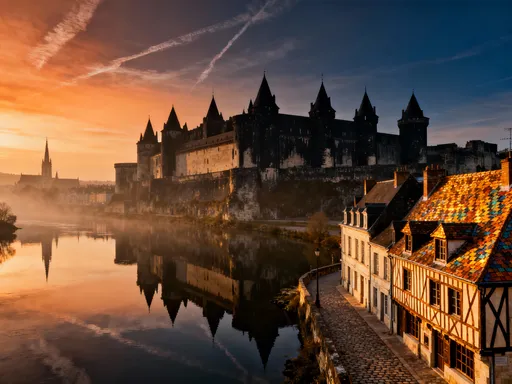
The first true architectural statement of Angers is often its castle, visible from several vantage points even before you reach the city’s heart. The Château d’Angers looms in the distance, its row of dark towers rising like sentinels. This early glimpse sets the tone for what’s to come: a city where history is not confined to museums but embedded in the streets, the rooftops, and the very air. Unlike larger French destinations that can feel overwhelmed by tourism, Angers retains an intimate, lived-in quality. Its architecture doesn’t perform for cameras—it simply exists, authentic and unpretentious.
Why does this matter for travelers? Because a city’s architectural identity shapes the emotional texture of a visit. In Angers, the absence of grand tourist boulevards and the presence of real neighborhoods invite slower exploration. You’re not just sightseeing—you’re discovering. The city’s layout encourages wandering, with hidden courtyards, quiet squares, and sudden views of the Maine River revealing themselves around corners. This sense of organic discovery is increasingly rare, and it begins the moment you step off the train and into a place where every structure, old or new, contributes to a coherent, evolving story.
The Fortress Heart: Château d’Angers and Medieval Power
At the center of Angers stands one of France’s most formidable medieval fortresses—the Château d’Angers. With its 17 massive round towers stretching over 600 feet along the riverbank, the castle is a masterpiece of military engineering from the 13th century. Built primarily from black volcanic rock known as basalt, its walls are nearly 13 feet thick in places, designed to withstand both siege and time. Commissioned by King Louis IX (later Saint Louis), the fortress served as a key stronghold for the Plantagenet rulers and later the French crown. Its imposing silhouette was meant to inspire awe and deter rebellion—a physical manifestation of royal authority.
What makes the Château d’Angers unique is not just its scale, but its state of preservation. Unlike many castles that were reduced to ruins or heavily romanticized in the 19th century, Angers has maintained much of its original structure. Restoration efforts over the past century have focused on authenticity, using traditional materials and techniques to repair battlements, walkways, and gatehouses. Visitors can walk the full circuit of the ramparts, experiencing panoramic views of the city and the meandering Maine River below. The sensation of standing atop these ancient walls, feeling the wind and the weight of history, is both humbling and exhilarating.
Inside the castle, another treasure awaits—the Apocalypse Tapestry, the largest medieval tapestry ensemble in the world. Commissioned in 1373 by Louis I, Duke of Anjou, it originally consisted of 90 scenes depicting the Book of Revelation. Today, 71 panels survive, meticulously restored and displayed in a climate-controlled gallery within the castle. The vivid imagery—dragons, angels, falling stars—was intended not only as religious instruction but also as a political statement, reinforcing divine order in turbulent times. Guided tours offer insight into the symbolism and craftsmanship, revealing how wool, silk, and metallic threads were used to create a narrative that still captivates centuries later.
For visitors, the best experience combines both exterior and interior exploration. Start with a walk along the moat for dramatic photo opportunities, then ascend to the ramparts at sunrise or sunset when the basalt glows a deep gray under soft light. Inside, allow at least two hours to absorb the tapestry’s details. Audio guides are available in multiple languages, and the site is fully accessible, making it suitable for families and older travelers alike. The Château is not just a monument—it’s a gateway into the medieval mindset, where architecture, power, and belief were inseparable.
Half-Timbered Secrets in the Old Town
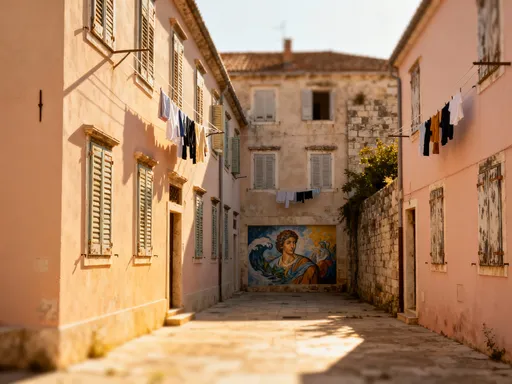
Just beyond the castle walls lies the historic heart of Angers, where narrow streets wind through neighborhoods like Saint-Aubin and La Boucle. Here, the architecture shifts dramatically—from the austere military stone of the fortress to the warm, human scale of Renaissance-era homes. The most striking feature of these districts is the abundance of half-timbered houses, their wooden frames exposed like skeletons, filled in with plaster and painted in soft ochres, blues, and creams. These buildings, many dating from the 15th to 17th centuries, reflect a turning point in urban life—when Angers transitioned from a fortified stronghold to a thriving commercial center.
The shift to timber construction was both practical and symbolic. After the Hundred Years’ War, the threat of invasion diminished, and cities began to expand beyond their walls. With less need for defensive masonry, builders turned to wood, which was more readily available and easier to work with. These houses were not just homes—they were statements of prosperity. The intricate carvings on beams, the overhanging upper floors, and the decorative brackets all signaled the owner’s status. Walking through Rue de la Boucherie, one of the best-preserved streets, you can still see remnants of old shop signs, iron railings, and even original cobblestones underfoot.
What makes these neighborhoods so enchanting is their authenticity. Unlike reconstructed historic districts in other cities, Angers’ old town was never fully modernized. Many of the buildings are still inhabited, their ground floors housing bakeries, bookshops, and cafés. This continuity of use gives the area a lived-in charm. In the morning, the scent of fresh bread drifts from open doorways; in the evening, lights glow behind lace curtains. The architecture tells stories not of kings and battles, but of butchers, artisans, and families who shaped the city’s daily rhythm for generations.
For travelers, exploring these streets is a lesson in observation. Look up to notice carved figures on beams—a lion, a saint, a mermaid—each with possible symbolic meaning. Pause at courtyards hidden behind arched passages, where wisteria climbs ancient walls. The best time to visit is late afternoon, when the low sun highlights the textures of wood and stone. Maps are available at the tourist office, but the real joy comes from getting slightly lost, allowing the city to reveal itself one quiet corner at a time.
Gothic Whispers: The Cathédrale Saint-Maurice
Dominating the skyline of central Angers, the Cathédrale Saint-Maurice is a study in balance and restraint. Unlike the flamboyant excess of Notre-Dame de Paris or the soaring verticality of Amiens, this Gothic cathedral exudes a quieter dignity. Its twin towers, built in the 13th century, frame a façade of harmonious proportions, where every arch and column serves both structural and aesthetic purpose. The west front is relatively plain compared to other French cathedrals, but this simplicity draws attention to the details—the finely carved portals, the rose window with its delicate tracery, and the way light plays across the limestone throughout the day.
The cathedral’s origins are even older than its Gothic form. Romanesque foundations from the 11th century still support parts of the nave, a testament to the site’s long religious significance. Over centuries, the building evolved, incorporating Gothic elements like pointed arches, ribbed vaults, and flying buttresses. What’s remarkable is how these additions were integrated without disrupting the overall unity of design. Inside, the atmosphere is one of serene clarity. The high windows flood the interior with natural light, illuminating the pale stone and creating a sense of uplift without overwhelming grandeur.
One of the cathedral’s most peaceful features is its cloister, tucked to the south side. Though smaller than those in monastic complexes, it offers a rare moment of stillness in the city center. The covered walkway, supported by slender columns, encloses a garden where herbs and flowers bloom seasonally. This space was historically used by clergy for meditation and study, and it still invites quiet reflection. The contrast between the cloister’s tranquility and the bustling Place du Ralliement just outside is striking—a reminder of how sacred and secular life have coexisted in Angers for centuries.
Visitors are welcome to attend services or simply sit in contemplation. The cathedral hosts regular organ concerts, which showcase its excellent acoustics. For those interested in architectural details, guided tours explain the symbolism of the stained glass, much of which dates from the 13th to 16th centuries. Scenes from the life of Christ, the Virgin Mary, and local saints are rendered in deep blues and reds, their colors intensified by the sunlight. The cathedral may not be the largest or most famous in France, but its understated elegance makes it one of the most moving.
Unexpected Contrasts: Modern Interventions in a Historic City
Angers’ architectural narrative does not end in the 18th century. One of the city’s most compelling qualities is how it welcomes contemporary design without compromising its historic character. This is evident in projects like the extension of the Musée des Beaux-Arts, completed in the early 2000s. The new wing, designed by architect Nicolas Michelin, features a glass and steel façade that reflects the sky and surrounding trees, creating a dialogue between old and new. Rather than imitating medieval styles, the addition stands apart—transparent, light, and deliberately modern—yet it complements the original 18th-century palace that houses the museum’s main collection.
This philosophy extends to public infrastructure. The Angers tramway, introduced in 2011, includes stations with sleek canopies of glass and metal, some integrated into historic squares with minimal visual disruption. At Place Lafayette, the stop is designed to blend with the neoclassical surroundings, using materials that echo the stone of nearby buildings. These interventions reflect a broader urban planning principle: innovation should enhance, not erase, the existing fabric. The city has resisted the temptation to over-modernize, instead opting for thoughtful, context-sensitive design.
The public response has been largely positive. Residents appreciate that new developments prioritize functionality and sustainability without sacrificing aesthetics. For example, the eco-district of Lac de Maine includes energy-efficient buildings with green roofs and solar panels, yet their forms and materials harmonize with the natural landscape. Similarly, the renovation of the former Saint-Serge barracks into a cultural and educational hub preserved historic facades while inserting modern interiors for offices and performance spaces.
For travelers, these contrasts enrich the experience. You can admire a 13th-century tapestry in the morning and, by afternoon, sip coffee in a café with floor-to-ceiling windows overlooking a minimalist plaza. This coexistence of eras invites reflection on how cities evolve. Angers demonstrates that preservation and progress are not opposites—they can be partners in shaping a livable, beautiful urban environment. The city’s ability to integrate modernity with grace is a model for historic towns everywhere.
Roofscapes and Rainbows: The Tile Work of Angers
One of Angers’ most distinctive yet often overlooked features is its rooftops. Across the city, especially in the central districts, slate tiles in vibrant hues—deep red, forest green, royal blue, and ochre—are arranged in intricate geometric patterns. These polychrome roofs are not random but part of a centuries-old tradition rooted in local geology and craftsmanship. The colored slates come from quarries in the Maine-et-Loire region, where natural mineral variations produce pigments that resist fading over time. Artisans cut and lay the tiles in chevrons, diamonds, and herringbone designs, turning each roof into a mosaic visible from upper windows and church towers.
The practice dates back to the Renaissance, when wealthier homeowners began using colored slate as a status symbol. Over time, it became a signature of Angers’ architectural identity, distinguishing it from neighboring cities like Nantes or Tours, where uniform gray slate dominates. The effect is especially striking after rain, when the tiles glisten like jewels, or at sunset, when the warm light enhances their richness. Neighborhoods around Place du Ralliement and Rue du Val-de-Maine offer some of the best views, where narrow streets create vertical galleries of color.
This tradition has been preserved through strict urban regulations. The city encourages the use of authentic materials in restorations, ensuring that new roofs maintain the historic palette. Some homeowners even commission custom patterns, continuing the artisanal legacy. For photographers and artists, these rooftops provide endless inspiration. A simple walk to the tower of the Cathédrale Saint-Maurice offers a panoramic view where the city unfolds like a patchwork quilt of color and texture.
What makes this detail so powerful is its quiet beauty. Unlike grand monuments, these roofs are not designed to be studied up close—they are meant to be glimpsed, to surprise and delight in passing. They remind us that architecture is not only about scale or symbolism, but also about the small pleasures of daily life. In Angers, even the skyward surfaces tell a story of regional pride, craftsmanship, and the joy of color in an often-gray world.
Why Angers Architecture Stands Apart
Angers does not shout its greatness. It doesn’t need to. Its architectural power lies in its layers—in the way a single street can contain a 12th-century chapel, a 16th-century merchant’s house, and a 21st-century tram stop, each coexisting with quiet dignity. This city resists easy categorization. It is not purely medieval, nor entirely Renaissance, nor dominated by any single style. Instead, it offers a rare continuity, where each era has left its mark without erasing what came before. The result is a built environment that feels honest, lived-in, and deeply human.
Compare Angers to better-known French cities, and its uniqueness becomes clearer. Unlike Lyon, where UNESCO zones are carefully curated, or Tours, where historic districts feel more like open-air museums, Angers integrates its past into everyday life. You don’t come here just to check off landmarks—you come to wander, to notice, to feel the texture of time. The use of local materials—basalt, colored slate, tuffeau stone—grounds the city in its region, creating a sense of place that is both specific and welcoming.
Equally important is the city’s balance between preservation and innovation. While many historic towns struggle with stagnation or过度 restoration, Angers embraces change with care. Modern buildings do not imitate the past; they converse with it. Public spaces are designed for people, not just tourists, with benches, trees, and open plazas that invite lingering. This thoughtful approach reflects a deeper philosophy: that architecture should serve life, not just memory.
For the thoughtful traveler, Angers offers a different kind of journey—one measured not in sights seen, but in moments noticed. The curve of a timber beam, the glint of a colored tile, the hush inside a cathedral nave—these are the details that linger. They invite a slower way of seeing, a deeper connection to place. In a world of rushed itineraries and crowded landmarks, Angers reminds us that beauty often lies in the overlooked, the understated, the quietly enduring. To walk its streets is to learn a new language—one spoken in stone, wood, glass, and light. And in that language, the city reveals not just its history, but its soul.