Wandering Through Time: Where Architecture Tells the Story of Ljubljana
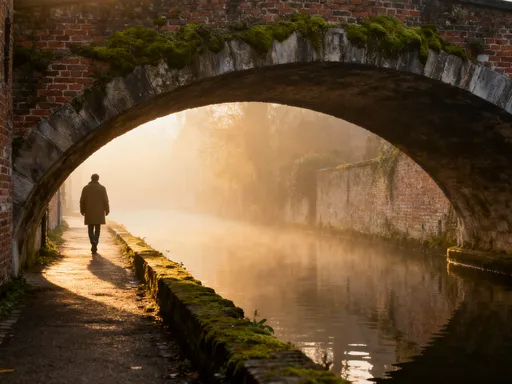
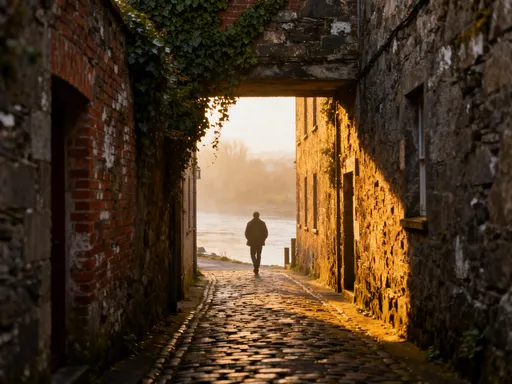
Ever walked through a city that feels like a living museum? Ljubljana isn’t just Slovenia’s quiet capital—it’s a masterpiece of architectural layers. From medieval charm to futuristic footbridges, every alley whispers history. I roamed its cobbled lanes slowly, letting the buildings guide me. This is slow travel at its finest: no rush, just rhythm. The city unfolds not in grand gestures but in quiet details—a carved stone dragon, a sunlit courtyard, the curve of a bridge over the emerald Ljubljanica River. Here, architecture is not merely functional; it is narrative. Each façade, staircase, and plaza tells a chapter of a story centuries in the making. To walk through Ljubljana is to read a book written in brick and mortar, where every turn of the page reveals another layer of time.
The Heartbeat of the City: Ljubljana’s Old Town as a Pedestrian Paradise
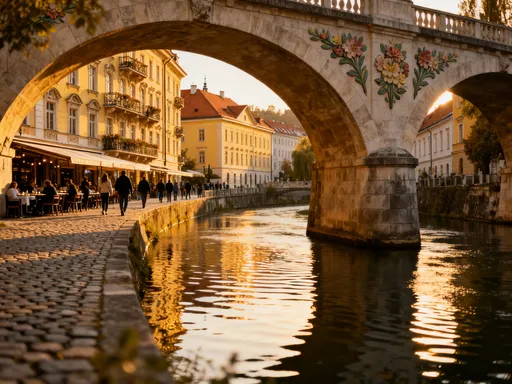
Ljubljana’s historic center is a rare urban sanctuary where cars are absent and footsteps set the pace. Since 2007, the city has maintained a car-free zone in its core, transforming what was once congested pavement into a breathing space for people, plants, and public life. This shift did not happen overnight, nor was it without debate, but today it stands as one of Europe’s most successful urban renewal projects. The Old Town, with its maze of cobbled streets and pastel-colored buildings, invites strolling, lingering, and conversation. The Ljubljanica River winds through it like a silver thread, lined with outdoor cafés, flower stalls, and street musicians whose melodies drift across the water at dusk.
At the heart of this pedestrian haven lies Preseren Square, named after Slovenia’s national poet France Prešeren. Paved in pink stone and anchored by a statue of the poet and his muse, the square functions as both cultural stage and social crossroads. It connects three major streets and serves as the starting point for many a wander. From here, visitors spill onto the Triple Bridge, where the flow of foot traffic splits across three parallel spans—an elegant solution to both function and form. The surrounding buildings display a blend of architectural styles: Baroque churches with ornate stucco, Secessionist façades with floral ironwork, and Austro-Hungarian-era townhouses that speak of imperial elegance.
What makes this area truly special is not just its beauty but its human scale. Buildings rarely rise above five or six stories, ensuring that the skyline remains intimate and the streets feel protected, almost embracing. Benches are plentiful, trees are carefully planted, and greenery spills from window boxes. This is urban design with empathy—a city that prioritizes comfort, safety, and beauty for its residents and guests alike. The absence of traffic noise allows other sounds to emerge: the clink of coffee cups, children laughing, the rustle of leaves in the breeze. In this stillness, one begins to notice the subtle details—the pattern of cobblestones, the way light filters through archways, the quiet dignity of centuries-old stonework.
Plečnik’s Legacy: The Architect Who Gave Ljubljana Its Soul
No discussion of Ljubljana’s architecture is complete without Jože Plečnik, the visionary architect whose work redefined the city in the early 20th century. Born in 1872, Plečnik studied under Otto Wagner in Vienna and worked in Prague before returning to his homeland with a mission: to give Ljubljana a distinct identity rooted in tradition yet open to modernity. His buildings are not just structures; they are meditations on balance—between past and present, grandeur and humility, function and symbolism. Today, his fingerprints are everywhere, from bridges and markets to churches and public stairs.
One of his most celebrated works is the Triple Bridge, which transformed a single 1842 bridge into a triumphant pedestrian gateway. By adding two flanking footbridges in the 1930s, Plečnik solved a practical problem—crowded walkways—while creating a ceremonial entrance to the Old Town. The new spans echo the original in stone and railing design, yet their wider arcades invite people to pause, lean, and look. Similarly, his design for the Central Market along the river’s edge is both utilitarian and poetic. The colonnade of arched stone pillars shelters vendors beneath, while the roofline mimics the rhythm of the surrounding hills. Locals still gather here daily, buying fresh produce, honey, and handmade crafts—a tradition sustained by thoughtful design.
Plečnik’s ecclesiastical work, such as St. Francis Church on Šmartinska Street, reveals his spiritual dimension. The interior is austere yet luminous, with geometric patterns in stone and wood that evoke reverence without extravagance. He believed architecture should serve the human spirit, not overpower it. His use of classical elements—columns, pediments, domes—is never mere imitation; instead, he reinterprets them with a modern sensibility, often incorporating local materials and craftsmanship. This synthesis of styles has come to define Ljubljana’s architectural character: dignified, humane, and quietly original.
From Castle to Café: Vertical Layers of Ljubljana’s Built Environment
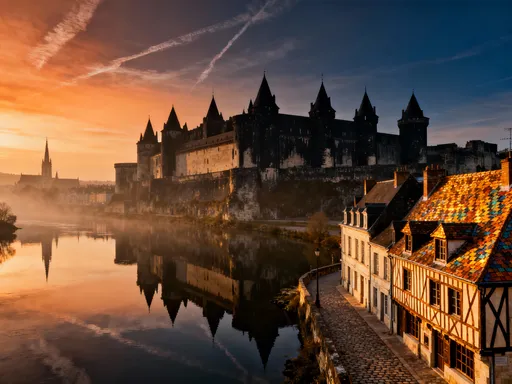
Ljubljana’s physical and symbolic center is Ljubljana Castle, perched atop a hill that rises abruptly from the city’s heart. Visible from nearly every street, the castle’s silhouette has watched over the city for over 900 years. Though its origins are medieval, it has been rebuilt and repurposed many times. Today, it functions as a cultural venue, housing exhibitions, a chapel, and a restaurant with panoramic views. The most recent addition—a glass-floored viewing platform called the Castle Tower—offers a thrilling perspective, allowing visitors to stand above the treetops and see the city spread out like a map below.
Reaching the castle is part of the experience. Visitors can walk up a winding forest path, take the funicular railway, or climb the outdoor staircase designed by Plečnik. Each option offers a different relationship with the landscape. The funicular, installed in 2006, blends modern engineering with minimal visual impact, gliding silently between trees. The Plečnik Staircase, in contrast, is a procession of stone steps flanked by simple railings and greenery, designed to feel like a ritual ascent. These vertical connections reinforce the city’s layered identity—where history, nature, and urban life coexist in harmony.
At ground level, the city’s social architecture unfolds in its café culture. Outdoor seating spills onto sidewalks and squares, blurring the line between private business and public space. In warm months, entire streets become open-air lounges, where friends gather over espresso and potica, a traditional nut roll. This informal extension of living space is not accidental; it is encouraged by urban policy and design. Wide pavements, shaded terraces, and noise-reducing surfaces make lingering not just possible but inviting. The café, in Ljubljana, is more than a place to drink coffee—it is a civic institution, a stage for conversation, and a marker of daily rhythm.
Green Concrete: How Sustainability Shapes Contemporary Architecture
Ljubljana’s commitment to sustainability is not a recent trend but a long-standing philosophy embedded in its urban planning. In 2016, the city was named European Green Capital, a recognition of its efforts in waste reduction, green transportation, and energy efficiency. But unlike some cities that pursue sustainability through high-tech spectacle, Ljubljana does so with quiet consistency. Its eco-friendly architecture avoids flashy statements in favor of practical, lasting solutions that respect the city’s historical fabric.
New public buildings, such as the Environmental Education Centre in Tivoli Park, use natural ventilation, solar panels, and rainwater harvesting systems without compromising aesthetic harmony. Green roofs are increasingly common, softening the edges of modern structures and supporting biodiversity. The Eco-City project in the Bežigrad district demonstrates how sustainable living can be integrated into urban renewal—featuring energy-efficient apartments, shared green spaces, and car-free zones. These developments are not isolated experiments but part of a broader vision: to create neighborhoods that are livable, resilient, and in balance with nature.
Even in private construction, there is a strong emphasis on context. New buildings are required to adhere to height restrictions, material guidelines, and design reviews to ensure they complement rather than disrupt the existing streetscape. This sensitivity prevents the kind of architectural discord seen in other rapidly developing cities. Sustainability, in Ljubljana, is not about erasing the past but enriching it—building for the future without losing the soul of the place. The result is a city that feels both timeless and forward-thinking, where environmental responsibility is not a slogan but a way of life.
Bridges That Connect More Than Just Banks
Ljubljana is a city of bridges—over 20 cross the Ljubljanica River within the city center alone. Each one has its own character, history, and symbolism. The Triple Bridge, as designed by Plečnik, is both a practical connector and a ceremonial threshold. The Dragon Bridge, completed in 1901, is more theatrical, guarded by four iconic dragon statues that have become emblems of the city. With wings outstretched and tails curled, these creatures symbolize strength and vigilance, drawn from the legend of Jason and the Argonauts, who were said to have passed through the area.
These bridges are more than infrastructure; they are gathering places, adorned with lights, art, and inscriptions. Some, like the Cobblers’ Bridge or the Butchers’ Bridge, reference historical trades once centered nearby. Others, such as the newer footbridges near the University campus, showcase contemporary design with sleek steel lines and minimalist railings. Yet even the modern ones respect the river’s gentle curve and the rhythm of the old city. At night, the bridges are illuminated in warm tones, their reflections shimmering on the water, creating a dreamlike atmosphere.
Walking across them, one feels a sense of transition—not just from one bank to another, but from one era to the next. The Dragon Bridge carries the weight of myth, the Triple Bridge the elegance of human-centered design, and the newer spans the promise of innovation. Together, they form a network of connections that bind the city’s geography, history, and culture. In a world where infrastructure is often invisible or utilitarian, Ljubljana’s bridges remind us that even the most functional elements can carry meaning, beauty, and identity.
Hidden Corners: Off-the-Beaten-Path Architecture Beyond the Center
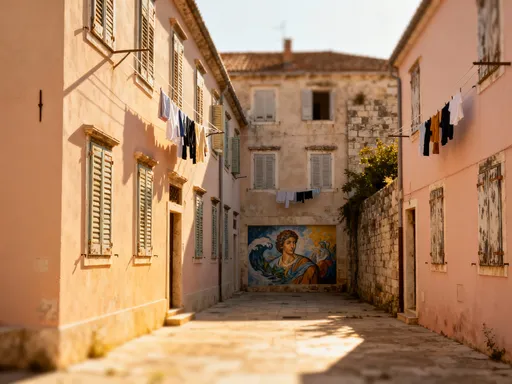
While the Old Town draws most visitors, Ljubljana’s true architectural soul also lives in its quieter neighborhoods. A short walk from the river leads to areas like Trnovo and Krakovska Vasi, where vernacular architecture and community life unfold at a gentler pace. These districts were once independent villages absorbed into the growing city, and they retain a village-like charm. Houses are painted in soft yellows, blues, and pinks, with wooden shutters, flower-filled balconies, and small front gardens enclosed by low stone walls.
Trnovo, in particular, is known for its church—St. John the Baptist—with a tall bell tower that dominates the skyline. The surrounding square hosts a weekly farmers’ market, where locals trade seasonal goods and catch up on news. Narrow lanes branch off into courtyards hidden behind iron gates, revealing communal spaces where neighbors share tools, tend plants, or sit together in the shade. These pockets of collective living reflect a tradition of cooperation and care that is woven into the urban fabric.
Here, architecture serves everyday life rather than spectacle. Buildings are modest in scale but rich in detail—hand-carved door frames, decorative eaves, and tile patterns that hint at regional styles. There are no grand monuments, yet the beauty is undeniable. These neighborhoods invite a different kind of exploration: not checklist tourism, but slow discovery. One might stumble upon a tiny chapel tucked between houses, a mural celebrating local history, or a garden bursting with roses and lavender. In these moments, the city reveals its quieter rhythms, its private joys, and its enduring sense of place.
Slow Travel as an Architectural Lens: Why Pacing Changes Perception
Ljubljana is a city that rewards slowness. In an age of rapid transit and curated itineraries, it offers an alternative: the pleasure of noticing. When one moves slowly, architecture ceases to be background and becomes conversation. A wrought-iron balcony tells of craftsmanship. A weathered doorstep shows generations of footsteps. A mosaic tile near a doorway hints at a family’s story. These details are missed in haste but cherished in stillness.
Slow travel, in this context, is not just a style but a mindset—one of mindfulness and respect. It means allowing oneself to be guided by curiosity rather than schedule. It means sitting in the same café for an hour, watching light shift across a façade. It means retracing a path to see what was overlooked. Ljubljana, with its compact size and pedestrian-friendly layout, is ideally suited for this approach. There are no vast distances to cover, no overwhelming sights to conquer. Instead, the city unfolds in layers, revealing itself gradually to those who take the time.
This way of traveling fosters a deeper connection to place. It encourages observation, reflection, and gratitude. It transforms tourism from consumption into experience. And in doing so, it aligns with the city’s own values—sustainability, community, and human dignity. To travel slowly through Ljubljana is to participate in its rhythm, to walk not as a visitor but as a temporary citizen, attuned to the quiet poetry of its streets.
Building Memories, One Step at a Time
Ljubljana teaches us that cities are not just collections of buildings but living narratives shaped by time, people, and purpose. Its architecture does not shout; it speaks in whispers—through the curve of a staircase, the reflection of a spire in the river, the warmth of a sunlit wall. To walk through it is to engage with history not as a spectator but as a participant. Every stone, every bridge, every café table holds a story waiting to be noticed.
In a world that often equates travel with speed and volume, Ljubljana stands as a quiet reminder: the best journeys are not measured in miles but in moments of connection. It invites travelers to slow down, to look closely, and to listen. Because architecture, at its best, is not just about shelter or style—it is about memory, identity, and belonging. And in Ljubljana, those qualities are built into every step you take.